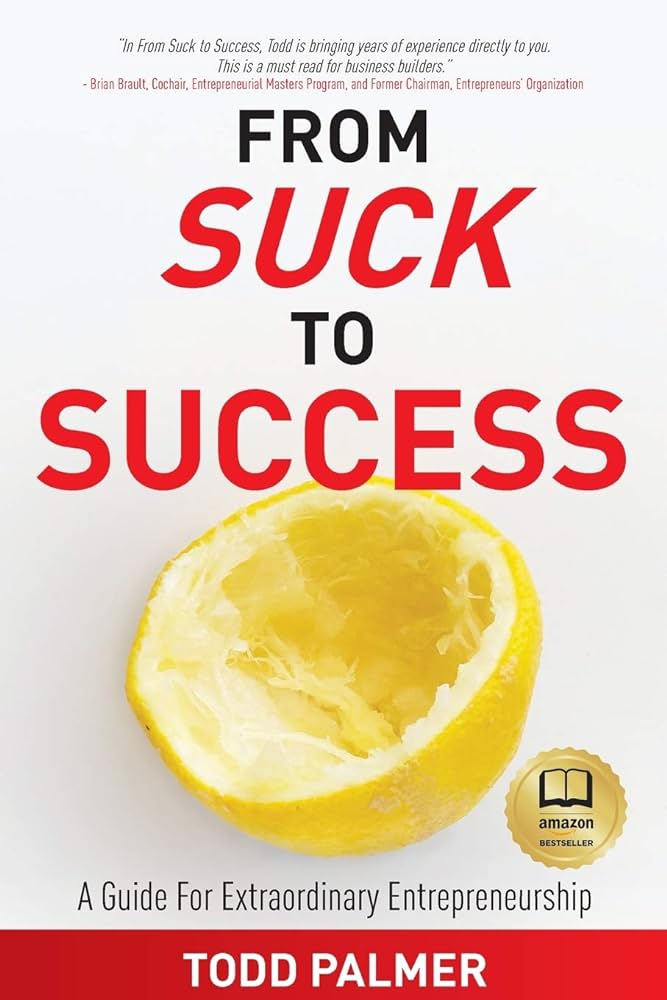
For some of you, this might hit a little too close to home:
A lot of what we call “drive” in entrepreneurship is fear.
- Fear dressed up as discipline.
- Fear masked as work ethic.
- Fear rewarded as success.
I know this because I lived it.
25 years ago, I was $600,000 in debt, staring at the real possibility of losing everything — my business, my home, my identity.
And what did I do?
I didn’t slow down or reflect, which made me feel trapped.
Reflection can open new paths and restore your sense of control.
I pushed harder.
Because I thought pressure was the answer.
It wasn’t.
The Pattern Most Founders Don’t See
Here’s what I see repeatedly:
- Founders who are winning on paper, but running on something else internally:
- Constant worry — disguised as focus
- Overworking — celebrated as discipline
Isolation — hidden behind high standards
And underneath it all, a belief that sounds like this:
“If I stop pushing, everything will fall apart. And if it falls apart… it means I failed.”
That belief doesn’t come from strategy.
It comes from wiring.
Where This Actually Comes From
Trauma researchers like Dr. Gabor Maté and Dr. Bessel van der Kolk have shown that when we experience early instability — loss, unpredictability, instability — the brain adapts for survival.
It creates internal rules like:
- I can only rely on myself
- Slowing down isn’t safe
- Control equals survival
Those patterns help you succeed early, in the start-up phase of business.
They make you relentless. Driven. Focused.
But at scale?
They become your ceiling.
Why This Is a Business Problem — Not Just a Personal One
Research from Harvard Business Review shows that leaders under sustained stress shift into short-term, defensive decision-making and lose access to strategic thinking.
And Gallup found: 70% of team engagement is directly tied to the emotional stability of the leader.
Which means:
When you’re anxious…
Your team feels it.
When you’re reactive…
Your team hesitates.
When you don’t feel safe…
Your company won’t either.
Your nervous system becomes the company’s operating system.
The Hidden Cost of “Push Harder” Leadership
You can still grow a business this way.
But here’s what it quietly costs you:
- Burnout (yours and your team’s)
- Slower, reactive decision-making
- High turnover of strong people
- A team that waits instead of leads
I’ve seen founders save $2,500 by cutting support…
…and lose $250,000 in bad hires, missed opportunities, and reactive decisions.
Because one decision made in fear is often more expensive than a year of clear thinking.
If You’re Honest, This Might Sound Familiar
- You feel like you can’t slow down without everything slipping
- You redo work your team already completed
- You’re exhausted—but still don’t trust anyone else to step in
- You tell yourself, “Once we get through this stretch, I’ll breathe”
That’s not leadership.
That’s survival.
And survival doesn’t scale.
Most founders operate in what I call Survival Mode Leadership, often unaware of how their internal state influences decisions, making self-awareness essential for effective shift.
Your brain is scanning for threats.
Everything feels urgent.
You’re reacting instead of leading.
But when you shift, something powerful happens:
- Decisions get cleaner.
- Conversations get shorter and more direct.
- Your team starts solving problems without you.
- And for the first time in a long time…
You feel like you can breathe.
Survival Leadership | Conscious Leadership | |
Driver | “If I stop, everything breaks.” | “My value is in clarity, not constant motion.” |
Result | Exhaustion, rework, and a dependent team | Faster execution, stronger ownership, better decision-making |
State | Reactive, overwhelmed, stuck in fight-or-flight | Regulated, focused, strategic |
How to Break the Pattern (Without Burning It All Down)
This isn’t about becoming softer. It’s about becoming more effective.
1. Identify the Internal Driver
You have a voice pushing you.
I call it the Itty Bitty Shitty Committee.
It says:
- “You’re behind.”
- “You’re not enough.”
- “Don’t slow down.”
The move isn’t to silence it.
The move is to notice it. Because awareness is what puts you back in control.
2. Replace Reaction With Curiosity
Fear wants certainty.
Leadership requires curiosity.
Instead of reacting, ask:
- What else could be true?
- What am I not seeing?
Neuroscience shows that curiosity shifts activity from the amygdala (threat center) to the prefrontal cortex (decision-making center).
That’s how you move from panic… to perspective.
3. Use the Pause as a Strategic Tool
Before you send the email…
Before you make the hire…
Before you change direction…
Pause.
Check your body.
Because that tight chest?
That shallow breath?
That’s not strategy.
That’s fear.
And that’s the moment you fire off the email you regret…
or make the hire you knew wasn’t right.
One Shift That Changes Everything
The goal isn’t to eliminate fear.
The goal is to stop letting fear make leadership decisions.
The Real Bottom Line
You cannot outwork a dysregulated nervous system.
You cannot scale a business that depends on your stress to function.
And at some point, the work shifts.
From fixing the business…
To looking at the person leading it.
One Question Worth Sitting With
Is your business running on strategy… or on your nervous system?
Because if it’s the second one…
You’re not building a company.
You’re building a cage.
If This Hit Close to Home
This isn’t a character flaw.
It’s a pattern.
But once you see it…
It becomes your responsibility to lead differently.
And if you don’t understand what’s driving your decisions right now…
You won’t fix the business.
You’ll just keep reacting to it.
Not to fix everything overnight.
But to finally see what’s really driving your results.
Final Thought
You don’t need more pressure.
You need more clarity.
Because the best leaders don’t win by pushing harder.
They win by knowing when to stop…
…and actually lead.