The difference between what we accomplish, what we intend, and what people actually experience.
A couple of years ago, a foundation in Detroit went looking for the closest living relative of a woman named Bernice Palmer. They found my brother, who eventually shared the news with me. Bernice was my grandmother, my father's mother. She died before I was born, and my father died when I was five, so I knew almost nothing about her. What I discovered about her life was remarkable, and it caused me to reconsider something I've spent a great deal of time thinking about as an entrepreneur and executive coach: legacy.
During World War II, my grandmother was one of the women known as the Packard Rosies. She worked at the Packard plant in Detroit, where the company had shifted from manufacturing automobiles to producing aircraft engines for the war effort. She identified improvements to the manufacturing process that management adopted, earning recognition for her contributions. According to our family history, those changes dramatically reduced production time and helped get more engines into service. In 1943, Eleanor Roosevelt visited Detroit and met with my grandmother in recognition of her work. Her story appeared in the national press, and a photograph of the two women became part of our family's history. When I first heard all of this, my reaction was pretty simple: my grandmother was a badass.
But the story didn't end there. My brother told me something else I never knew. After the war, Bernice started connecting people who needed work with bars, restaurants, and other businesses that needed employees. She collected a commission for placing them. My mother worked as a server for her, and my father tended bar. Long before I founded Diversified Industrial Staffing, my grandmother was doing her own version of staffing. I spent twenty-four years running a staffing company and had absolutely no idea that someone in my family had done something similar decades earlier.
What an Accomplishment Doesn't Tell Us
In September 2024, Jennifer and I attended a dedication honoring my grandmother, along with Tyler and his wife. I was proud of what Bernice accomplished. Here was a woman who contributed to the war effort, challenged the way things were being done, and later helped people find employment. But I also had to acknowledge something uncomfortable. Until the foundation contacted my brother, my grandmother had made virtually no impression on my life. I didn't know her story, I didn't know about the recognition she'd received, and I didn't know she'd worked in staffing.
Despite everything I learned about her accomplishments, I still didn't know what kind of person she was. Was she a loving mother? A good friend? Someone who treated people with kindness and respect? What was she like when things didn't go her way? I don't know. The awards and newspaper articles tell me what she accomplished, but they don't tell me how the people closest to her experienced her. And that distinction has stayed with me because we often confuse what someone achieves with who they actually are.
There's another part of our family history that gave me something to think about. My father spent portions of his childhood in an orphanage. I don't know all the circumstances that led to that, and I'm not interested in judging my grandmother for decisions made during the Depression, under pressures I can barely imagine. But learning about his childhood gave me a different perspective on my own. My father died when I was five years old, and for much of my life, I understood that loss primarily through what it meant for me. Now I have more context about the experiences that may have shaped him before I was even born.
That doesn't change what happened, and it certainly doesn't answer every question. But it has changed how I think about my family's history and some of the experiences that shaped my life. It also made me wonder how much of our own story the next generation will ever really understand, and whether the things we hope people remember about us are the same things they actually experience while we're here.
The Legacy We Intend Versus the Impact We Create
Entrepreneurs spend a tremendous amount of time building things. We build companies, develop products, create jobs, solve problems, and take risks that other people may never fully appreciate. I've spent much of my adult life doing exactly that. Diversified Industrial Staffing made the Inc. 5000 six times, and I'm proud of what we accomplished, especially considering how close we came to bankruptcy. The company no longer exists, but that doesn't mean the work didn't matter or that its impact disappeared when the business did.
We helped people find jobs, supported families, developed employees and leaders, and helped customers solve problems. Some of those people undoubtedly carried lessons and experiences from our company into other parts of their lives. I'll never know the full impact, and that's what I've been thinking about. We tend to measure our accomplishments by what we can see: revenue, profitability, growth, awards, business valuations, and the organizations we build. Those measures matter, and I'm not dismissing them. But they don't necessarily tell us how we're affecting the people around us.
An entrepreneur can build an extraordinary company and still struggle in their marriage. A CEO can create substantial financial success while developing a leadership team that is afraid to make decisions. A founder can sincerely believe they're sacrificing everything for their children while those children experience a parent who is rarely available. The intention may be admirable, but the experience can be very different. And because we're often so focused on what we're trying to accomplish, we don't always recognize the difference between the legacy we intend to create and the impact we're actually having.
A Friend Asked Me a Question I Couldn't Answer
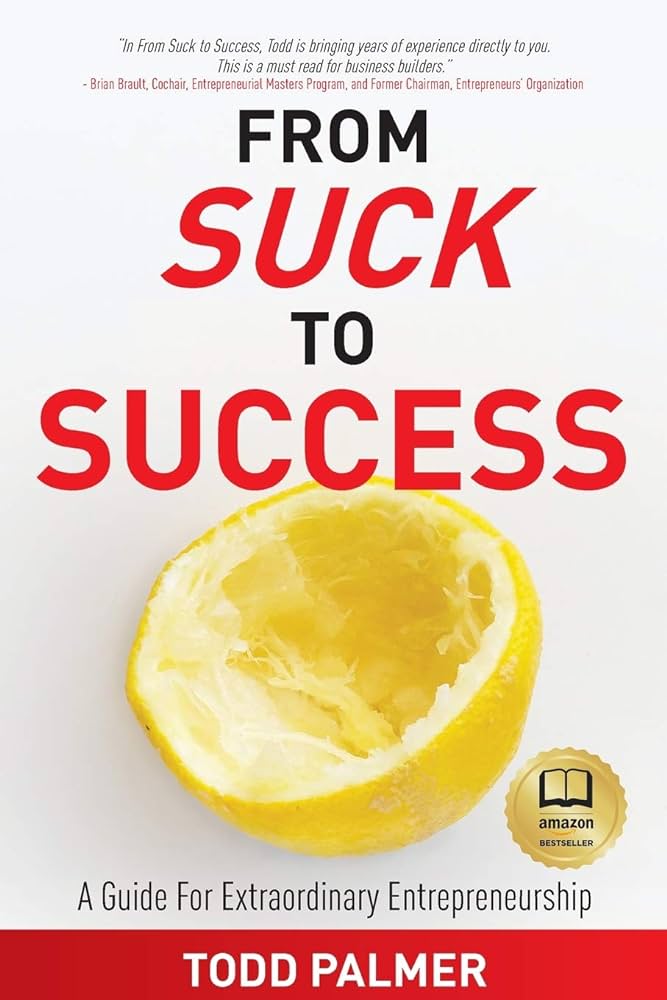
A few years ago, I was talking with my friend David about coaching, writing, and the impact I wanted to have. I'd written From Suck to Success, and I was telling him I wasn't particularly interested in writing another book. Writing is a lot of work, and I enjoy being in the room with entrepreneurs, helping them work through something difficult, and seeing the moment when a new perspective finally connects. There's something incredibly rewarding about watching someone's face change when they recognize something they hadn't seen before.
David listened and then said something that caught me completely off guard: "Oh, so you coach for yourself." Now, David isn't the kind of guy who challenges people just to get a reaction. He's thoughtful, kind, and someone whose opinion I respect, so when he said that, it landed. My initial reaction was to wonder whether he was right. Was I doing this because I wanted to help people, or because I enjoyed the feeling I got when I could see that I was helping them? The answer, I realized, wasn't necessarily one or the other. I genuinely wanted to make a difference, but I also enjoyed knowing that I was making one.
Then David told me something I didn't know. His nephew had read my book, and it had changed his life. I'd never met his nephew. I didn't know he'd read the book, much less that it had made a meaningful difference to him. David challenged me to consider how much impact I might be having that I would never personally witness. Why did I need to see the result for it to count? That question changed the way I thought about my work because I realized I was measuring my impact, at least in part, by the satisfaction I experienced from seeing it happen. In doing so, I may have been limiting the ways I was willing to make a difference.
The Wake Behind the Boat
When I started coaching, one of my goals was to help develop as many better leaders and coaches as possible. I've come to think about that impact like the wake behind a boat. The boat moves forward, but the wake spreads well beyond the place where the boat was. I might help an entrepreneur recognize that their need for control is preventing their leadership team from growing. If that entrepreneur changes how they lead, their employees may become more confident, capable, and willing to take responsibility. Some of those employees will eventually lead other teams or start companies of their own, and the influence continues.
Or I might work with a founder who realizes they're bringing the frustration and pressure of running their company home every evening. If they begin showing up differently with their spouse or children, those relationships may change. Their children may learn a different way to handle conflict, failure, or difficult emotions, and that influence may continue long after the coaching relationship ends. I'll probably never hear about most of it, but that doesn't make it any less meaningful. David helped me recognize that I don't have to personally witness every outcome for the work to matter.
I think about this in connection with Traumapreneur, the book I'm writing about how our experiences can influence the way we lead, build businesses, and live our lives. Understanding where our patterns come from can be valuable, but understanding alone doesn't necessarily change how we behave. At some point, we have to decide what we're going to do differently. I grew up without my father, and that experience shaped parts of my life, although I'm still learning to understand exactly how. The important question isn't simply what happened to me. It's how those experiences influenced the way I showed up for Tyler, the relationships I've built, the mistakes I've made, and the things I've worked to change.
We can't rewrite our histories, and we can't control every way our experiences influence us. But we can become more aware of the patterns we're repeating and more intentional about what we pass along to the people around us. Sometimes that means having an uncomfortable conversation, acknowledging a mistake, changing how we respond to conflict, or recognizing that the behaviors that helped us succeed professionally may not be serving us nearly as well in our personal relationships.
What Are People Actually Experiencing From You?
Here's where this becomes particularly relevant for entrepreneurs and CEOs. I've worked with founders who genuinely believe they're empowering their leadership teams, but when we examine what's happening, they're still making most of the important decisions, questioning how others approach their responsibilities, or stepping in whenever something doesn't go exactly as planned. Their intention is to build a strong leadership team, but what their employees may experience is a lack of trust. The founder wonders why nobody takes ownership, while the team has learned that ownership comes with the risk of being second-guessed.
I've also seen entrepreneurs who believe they're protecting their families by working harder, growing the company, and creating financial security. Those can be admirable goals, and there are times when building a business requires genuine sacrifice. But if the people they love rarely see them, the experience may be different from what the entrepreneur intends. Similarly, a leader may genuinely care about their employees while communicating frustration in ways that leave people reluctant to speak honestly. The leader intends to create accountability, but the team experiences fear.
None of these examples automatically makes someone a bad leader, parent, or person. They illustrate something I've learned repeatedly, including through my own mistakes: Our intentions don't determine how other people experience us. We may believe we're being supportive, responsible, generous, or accountable, but those intentions don't guarantee that our behavior is creating the impact we want. And because we can't always see ourselves clearly, we need to be willing to ask people how they're actually experiencing us.
That requires curiosity, humility, and enough psychological safety for someone to tell us something we may not want to hear. It's also why I believe personal growth and business growth are so closely connected. When an entrepreneur changes how they communicate, delegate, handle conflict, or respond to mistakes, the impact extends beyond their own experience. It affects the people around them, sometimes for years, and often in ways they'll never fully recognize.
The Legacy You May Never See
When I think about my grandmother today, I'm proud of what she accomplished. I'm grateful that someone preserved enough of her story for my family to discover it decades later, and I'm struck by the fact that her accomplishments were only one part of a much larger life I will never fully understand. I don't know how Bernice would have described the legacy she hoped to leave, and I don't know whether she ever imagined that a grandson she would never meet would spend twenty-four years in the staffing industry. But I know that learning her story changed something in me.
David's challenge changed something too. I no longer think about legacy simply in terms of what I build, what I accomplish, or whether someone remembers my name. I think about the people who may be different because our lives crossed paths. That includes my family, my friends, the people I've worked with, the entrepreneurs I've coached, and people like David's nephew whom I may never meet. Business success can absolutely be part of that legacy, but the question is whether the way we're pursuing success is creating the impact we actually want.
So here's something I'd encourage you to consider. If your grandchildren never remember the name of your company, what would you want them to know about you? Would you want them to know that you were successful, that you worked hard, that you created opportunities for other people, or that you were someone they could count on? Maybe all of those things. But there's another question that may be more important: Are the people in your life experiencing those qualities from you today?
I'm not talking about what you hope they see or what you intend them to feel. I'm talking about what they're actually experiencing in their interactions with you. If you don't know, consider asking someone who matters to you. It might be your spouse, your children, a close friend, or someone on your leadership team. Ask them what it's like to be on the receiving end of your leadership, your friendship, or your parenting, and be willing to listen without immediately explaining your intentions.
You might discover that the legacy you believe you're creating and the impact you're actually having aren't quite the same. That can be an uncomfortable realization, especially when you've spent years convincing yourself that all the sacrifices were worth it. But it can also create an opportunity to change how you show up while you still have the chance.
The companies we build matter, and so do the accomplishments we're proud of. But the people who experience us along the way are also part of what we leave behind. We may never know the full extent of that impact, and perhaps we don't need to. What matters is being intentional about the way we live, lead, and treat people today, rather than assuming our good intentions will somehow speak for themselves.
Here when you need me,
Todd
P.S. Do you know a story about one of your grandparents that most people in your family don't? Hit reply and tell me. I'd love to hear it.